When my oldest son was a youngster he periodically posed the question, “Dad, what’s the most exciting thing that ever happened to you?” It was a question I never remember asking my Dad and I wonder today

what his answer would have been – he did not serve in World War I. At any rate my answer to my son, John, was always the same; recounting episodes of the Battle of the Bulge with particular emphasis on Bastogne since I was “in resident” there from December 20, 1944 until January 17, 1945. I would often tell the children the depressing story of December 13, 1944, just after I had finished reading “the night before Christmas” to them on Christmas Eve, emphasizing that this particular Christmas was neither happy nor merry for many people. For a long time I had promised myself to put this Christmas story on paper and it is some 28 years later that it is occurring.
Much of the detail of this particular period remains surprisingly fresh in my mind and the dates and sequences I had recorded daily in my diary which I carefully kept (contrary to my army directives) and still possess. I have always chuckled over the years to see General after General (one being a past President) publish his memories which had to have had origin in a carefully kept record – maybe this rule did not apply to General officers!
I was a member of the Medical Battalion of the 10th Armored Division. This division left Georgia where it had trained too long and arrived in Cherbourg September 23, 1944. The Division first saw action in attacking the outer fortifications of Motz on November 14th and my assignment was to help operate a clearing station preparing patients for transit to the nearest evacuation hospital. Working in a safe climate, free of artillery and small arms fire, I was ill-prepared for the baptism that was soon to follow.
On December 14th I was detached to the 20th Armored Infantry Battalion as their surgeon to replace their regular officer who had been evacuated with pneumonia. I had assigned to me a dentist, and about 30 enlisted men who were trained as liter bearers and first aid men. Our detachment had armored half-track ambulances and two jeeps and was a well trained unit. The 20th Armored Infantry was part of a combat team, the latter composed of a tank battalion, an engineer platoon, and a reconnaissance squadron. This team, called “Team Desobry,” after its infantry commanding officer, moved through Luxembourg on December 17th on what we believed was an administrative march with eventual quartering of the unit in Luxembourg. I have always been impressed with how little information in the army filters down to personnel at my level from the Army and Corps Headquarters. Perhaps there was some virtue in this, for our assignment actually was to move into the town of Noville (seven kilometers northeast of Bastogne). Field Marshall Gerd von Rundstedt could have told us our assignment. As the West Front Commander, he had struck a blow in the Ardennes. He was on his way to override Belgium, Luxembourg, Northern France and penetrate to the channel coast. The little village of Bastogne was in his way since it was the hub of a network of seven spoke like highways and would need to be taken on the way to his capturing Antwerp, largest supply point for Allied troops on the West Front. Soldiers of the 9th Armored Division, 4th and 28th Infantry Divisions could also have made our assignment clear since their ninety-five mile sector was being overrun by the German onslaught at that moment.
Arriving in Noville at six a.m., December 19th, we found a sleepy little crossroads. My Aid Station was located in the pub. I found this type of building always best for our purposes since the large drinking area accommodated many litter patients. Within two hours of our arrival the little town had turned into a shooting gallery featuring small arms, machine gun and tank fire on the main thoroughfare. The large front window of the pub was an early casualty and it was necessary to crawl on the floor to avoid being hit as we treated our increasing number of casualties. Someone had selected our backyard as the “ammo” dump and this did not boost our equanimity. Team Desobry was ordered to hold Noville at all cost and it was not until the Battalion Command Post was hit and Major Desobry was wounded that we were ordered to withdraw to Bastogne. Evacuation of the score of injured had been virtually impossible. We did load four patients into a half-track at one point and just as it lumbered off, it received a direct hit from a tank and burst into flames. The four patients were unloaded and returned to the Aid Station; this under the gaze of the German tank commander. Upon receipt of the withdrawal order we were given ten minutes to move out. Since I had no functioning vehicular transportation and no litters I decided I would stay and surrender my patients to the Germans. I asked for volunteers to stay with me but the silence was deafening! It looked as if only myself and the tavern owners (an old lady and her husband who said their rosaries aloud for two days in their cellar) would remain behind. At this point my first sergeant seized the initiative and ran into the street, shouting at the departing tanks to swing by the Aid Station. The tankers ran into our building after ripping off all the doors from the walls, strapped our patients to the doors, and tied them to their vehicles. The column then moved down the road to Bastogne where I assumed there was a hospital and fresh defenders! It was not until after the war that we learned that Team Desobry had stopped the entire Second German Panzer Division which had assumed it was opposing a much stronger force. Outnumbered by ten to one, the Noville defenders knocked out thirty-one enemy tanks in two days.
Even the trip back to Bastogne turned into another fire fight. In a later afternoon fog the column was stopped by the enemy who knocked out our tanks and harassed us with small arms fire from the flanks. We treated serious injuries in the ditches as we waited three hours for the column to move again. Lying in the ditch and having sniper fire chip away at a fence post beside me was a terrifying experience. I was head to head in the ditch with my dental officer. He did not wear a helmet with the bright red cross and suggested mine was a sniper target and should be shed – a suggestion I resisted. Many of our enlisted men demonstrated great bravery on the road, pulling tankers from their blazing tanks, driving jeeps with the injured on the hood to our Aid Station. Many of these air men were soldiers whose reputation in the unit would have given no clue to the fact that under stress they could meet this challenge. This observation was to be pounded home again, time after time, in the months ahead. I have never learned who to predict will be a hero! I have often thought I’d still be in that ditch on the Bastogne road if it had not been for the arrival of a Parachute Battalion from the 101st Air Borne Division. This division had been hastily summoned from a rest area and was rushed to Bastogne without sufficient weapons and suitable warm clothing. They were instrumental in getting the remnants of Team Desobry back to Bastogne on December 20th by routing the enemy.
.jpg)
Bastogne on this date was an intact but somewhat deserted city. The sight of the residents dragging their belongings with them on little carts, leaving as we entered, was recognized as a bad omen – “rats leaving the sinking ship.” Many of these people faced the difficult decision of whether to retain the American flag over their door or to put the Swastika back up. My Aid Station was initially in a garage on one of the main streets. Two days later I had to move into a larger area in a private three story home as the casualties increased and because I could not heat the garage adequately – the weather was very cold and there was about a foot of snow on the ground. My diary indicates we worked twenty-four hours a day in the Aid Station, that the plasma froze and would not run, that we had no medical supplies and that the town was continually shelled. It was a major decision whether to run up the street a block to the Battalion Command Post. We in Bastogne never had any idea of the importance of this battle, thinking it was just another town. Its importance did not dawn upon us until one day we hooked up a radio to a vehicular battery and heard the BBC in London paying tribute to the “Gallant defenders of Bastogne.” They compared this battle to Waterloo, Gettysburg, and Verdun. The news that we were surrounded also had a curious effect upon our men – such remarks were heard as: “they’ve got us surrounded, the poor bastards,” or “surrounded, good – now we can attack on all sides.” I can never remember considering that we were going to lose that fight or that help would not eventually arrive. German artillery fired propaganda leaflets into the town, urging us to surrender. These were regarded by the GIs as humorous and were collected and swapped like baseball cards. One of these had a photograph of a little girl and her letter to her daddy.
Dear Daddy,
Today I went to the birthday party of Jean, but I didn’t have a good time because I was worrying so about you. Last night Mummy cried and cried because we haven’t heard from you for so long. Jean got a letter from her Daddy. He is a prisoner of war. Jean says he will be sure to come back home now. Oh, Daddy, you just got to come home. We miss you so.
Loads of kisses,
Winnie
Living in a city without electricity, water, food and medical supplies was a challenge. My men scrounged port steaks, ham and jam from the vegetable cellars of deserted homes. The combat units sent whatever food they found to the Aid Station and any medical supplies in deserted doctors’ offices found their way to us. Civilian physicians were always scarce in towns we took. I never remember seeing a civilian physician in all of Germany. The only explanation for this I can offer was that many physicians were members of the Nazi party and that they took to the road before we arrived. Jewish physicians had either left the country or were in concentration camps. This, of course, had serious implications in that the civilian population descended upon our Aid Station as soon as the Red Cross flag was hoisted – I even did a delivery! The water problem was serious – melted snow was some help but Champagne filled a big gap. Very few people have shaved and bathed in Champagne as I did! On December 22nd German Commander sent a major, captain and two enlisted men into the town with a while flag – it was quickly rumored that they had come to arrange our surrender. Many of our defenders took this lull to shave, wash, to visit the straddle trenches. What followed is well known – we were given two hours to surrender the garrison or face complete destruction. The German Commander, Lt. General von Luttwitz, listed one Artillery Corps and six heavy A.A. Battalions as ready to annihilate us. General McAuliffe’s reply of “nuts” posed a problem for their interpreters. The best they could do with the translation was: “Go to Hell.” We were advised that a heavy shelling would occur – it did but I can not recall it being any different from the usual.
Now, in regard to the care of the wounded in Bastogne, I have always believed and still do that this did not constitute a bright page in the history of the Army Medical Department. I operated the only Aid Station for the Armored Division Combat Command although there were at least three other Battalion Surgeons with the Armor. I was holding over one hundred patients, of whom about thirty were very seriously injured litter patients. The patients who had head, chest and abdominal wounds could only face certain slow death since there was no chance of surgical procedures – we had no surgical talent among us and there was not so much as a can of ether or a scalpel to be had in the city. The extremity wounds were irrigated with a preciously low supply of hydrogen peroxide in an attempt to prevent gas infection. I attempted to turn my litter bearers into bedside nursing personnel – they were assisted by the arrival at our station December 21st of two registered female civilian nurses. One of these nurses, Renee Lemaire, volunteered her services and the other girl was black, a native of the Belgian Congo. She was “willed” to me by her father and when we eventually left Bastogne he was most distraught with me for refusing to take her along. They played different roles among the dying – Renee shrank away from the fresh, gory trauma, while the Congo girl was always in the thick of the splinting, dressing, and hemorrhage control. Renee preferred to circulate among the litter patients, sponging, feeding them, and distributing the few medications we had (sulfa pills and plasma). The presence of these two girls was a morale factor of the highest order. This decaying medical situation was worsening – with no hope for the surgical candidates, and even the superficial wounds were beginning to develop gas infection. I never did see any tetanus develop during the entire siege. It was at this point that I visited the acting Division Surgeon of the 101St Air Borne Division and requested he make an effort to bring medical help to us.
I had not visited the Air Borne area up until this time, December 23rd. Their headquarters and hospital area was in a former Belgian barracks compound. Major Davison, their surgeon, listened as I detailed our hopeless situation, and he assured me it was impossible to bring a glider surgical team into the area because of the weather and because the Germans would knock down anything that tried to fly in. He also stressed the fact that his paratroopers were used to being cut off (Normandy and Holland), and this situation was the expected. He then brought me to a riding hall where I saw the unbelievable! There on the dirt riding floor were six hundred paratroop litter cases – I can not recall the number of walking wounded or psychiatric casualties. These patients were only being sustained as were mine. I did see a paratroop chaplain (armed with a pistol and shoulder holster) moving among the dying. While I was there someone announced that General Patton was only a few miles out and that the road in would be opened momentarily. This evoked loud cheers and whistles from all those in the riding hall. Gas gangrene was rampant there, aided and abetted, I’m sure, by the flora on the dirt floor. Major Davison did drive into the German lines later with a white flag in an attempt to arrange a truce for medical evacuation. He proposed to take out one German wounded to two American but this was refused by the ranking German medical officer.
I returned to my Aid Station very depressed – it is ironic but surgical help did arrive in the person of a Major Sorell on December 26th. He came in via a piper cub to care for sixty patients – a mistake in decoding from the Air Borne headquarters had occurred and the figure of six hundred surgical patients was interpreted as sixty. Major Sorrell had a basic instrument kit and a few cans of ether. When he saw the riding hall and the mass of patients needing surgery he was overwhelmed. His decision was to take care of the gas infected extremities first; feeling that he could save more lives this way, as against the time it would take to do one belly, one chest, or one head case. On December 23rd hundreds of C-47’s droned over Bastogne and multicolored parachutes fell to earth – each color representing a various category of supplies. Food, ammunition, blankets, medical items were eagerly gathered. There was no attempt at control collection and each unit corralled whatever fell in their vicinity. Many parachutes fell in German territory, and we later learned that they relished the famed “C” rations. Even the parachutes were utilized as bedding in our hospital. I can recall Renee Lemaire leaving her duties and rushing into the back yard to get a chute. She wanted the silk for a wedding dress. She invariably was beaten out by a soldier and always returned empty handed.
December 24th was another day of constant shelling. General McAuliffe sent his famous Christmas message to the troops asking them, “What’s merry about this Christmas?” He added that they were cold and hungry and not at home, but that they had stopped four Panzer divisions, two infantry divisions and one Parachute division. He concluded his message saying that we were giving our loved ones at home a Merry Christmas and that we were all privileged to take part in this gallant feat of arms. At 8:30 p.m. Christmas Eve, I was in a building next to my hospital preparing to go next door and write a letter for a young lieutenant to his wife. The lieutenant was dying of a chest wound. As I was about to step out the door for the hospital one of me men asked if I knew what day it was, pointing out that on Christmas Eve we should open a Champagne bottle. As the two of us filled our cups, the room, which was well blackened out, became as bright as an arc welders torch. Within a second or two we heard the screeching sound of the first bomb we had ever heard. Every bomb as it descends seems to be pointed right at you. We hit the floor as a terrible explosion next door rocked our building. I ran outside to discover that the three-story apartment serving as my hospital was a flaming pile of debris about six feet high. The night was brighter than day from the magnesium flares the German bomber pilot had dropped. My men and I raced to the top of the debris and began flinging burning timber aside looking for the wounded, some of whom were shrieking for help. At this juncture the German bomber, seeing the action, dropped down to strafe us with his machine guns. We slid under some vehicles and he repeated this maneuver several times before leaving the area. Our team headquarters about a block away also received a direct hit and was soon in flames. A large number of men soon joined us and we located a cellar window (they were marked by white arrows on most European buildings). Some men volunteered to be lowered into the smoking cellar on a rope and two or three injured were pulled out before the entire building fell into the cellar. I estimated that about twenty injured were killed in this bombing along with Renee Lemaire. It seems that Renee had been in the kitchen as the bomb came down and she either dashed into, or was pushed into the cellar before the bomb hit. Ironically enough, all those in the kitchen were blown outdoors since one wall was all glass. I gathered what patients I still had and transported them to the riding hall hospital of the Air Borne division. At about 2:00 a.m. Christmas morning the bomber returned and totally destroyed a vacant building next to the smoldering hospital. I have often wondered how the pilot picked this hospital as a target. There were no external marking but, as some of the men said, the bomb must have come down the chimney. Many tanks and half tracks were parked bumper to bumper in the street in front of the hospital so it seems probable he simply picked an area of high troop concentration. Before our unit left Bastogne we dissected the hospital rubble and identified the majority of the bodies, including Renee Lemaire. I brought her remains to her parent encased in the white parachute she so dearly wanted. I also wrote the following commendation for her and forwarded it to our Commanding General:
Medical Detachment
20th Armored Infantry Battalion
APO 260, US Army
1 January 1945
SUBJECT: Commendation for Renee Bernadette
Emilie Lemaire (deceased)
To: Commanding General
10th Armored Division
APO 260, US Army
(Attn: Division Surgeon)
Thru Channels:
As Battalion Surgeon, 20th Armored Infantry Battalion, I am commending a commendation for Renee Lemaire on the following evidence:
This girl, a registered nurse in the country of Belgium, volunteered her services at the aid station, 20th Armored Infantry Battalion in Bastogne, Belgium, 21 December, 1944. At this time the station was holding about 150 patients since the city was encircled by enemy forces and evacuation was impossible. Many of these patients were seriously injured and in great need of immediate nursing attention. This girl cheerfully accepted the herculean task and worked without adequate rest or food until the night of her untimely death on 24 December, 1944. She changed dressings, fed patients unable to feed themselves, gave out medications, bathed and made the patients more comfortable, and was of great assistance in the administration of plasma and other professional duties. Her very presence among those wounded men seemed to be an inspiration to those whose morale had declined from prolonged suffering. On the night of December 24 the building in which Renee Lemaire was working was scored with a direct hit by an enemy bomber. She, together with those whom she was caring for so diligently, were instantly killed.
It is on these grounds that I recommend the highest award possible to one, who though not a member of the armed forces of the United States, was of invaluable assistance to us.
Jack T. Prior
Captain, M.C.
Commanding
Renee Bernadette Emilie Lemaire
Place du Carre 30
Bastogne, Belgium
I have never heard what action was taken on this commendation.
Lt. Col. Abrams (now General Abrams and awaiting confirmation as Army Chief of Staff) opened the road on December 26 and elements of the 4th Armored Division poured into Bastogne. I spent the next few days assisting Major Sorrell in surgery, and, on December 27th a Glider Surgical Team arrived. This was a highly organized unit and they worked as teams on the abdomen, chest, etc. It was their role to prepare as many casualties as possible for evacuation to the rear. The Germans continued to shell the town day and night and the bombers continued their activities several times a night until January 2nd. It was not until January 17th that Team Desobry left Bastogne.
The most spectacular battle of World War II was over. More than fifty-six thousand Americans were killed in this winter blitz. The Germans had thrown five hundred thousand crack troops and one thousand tanks into their last stand. They had used eight hundred Luftwaffe planes in the Ardennes battle. They are now reluctantly withdrew, battered and bleeding, and the wound of that fight never healed.

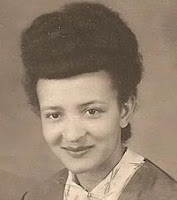
 Ms. Chiwy is one of the nurses who worked with Dr. Prior when their aid station in Bastogne took a direct hit from a German fighter-bomber on Christmas eve, 1944. Thirty American soldiers died in the aid station, along with one of the nurses, Renee Lemarie.
 pictured at right, when he served with the Medical Battalion of the 10th Armored Division. At left is Dr. Prior in the 1980's as Chairman of Pathology at
  Community General Hospital. He also served as President of the Onondaga County Medical Society at the time.
  pictured at right, when he served with the Medical Battalion of the 10th Armored Division. At left is Dr. Prior in the 1980's as Chairman of Pathology at
  Community General Hospital. He also served as President of the Onondaga County Medical Society at the time.
  r. King said.
  r. King said.


.jpg)


